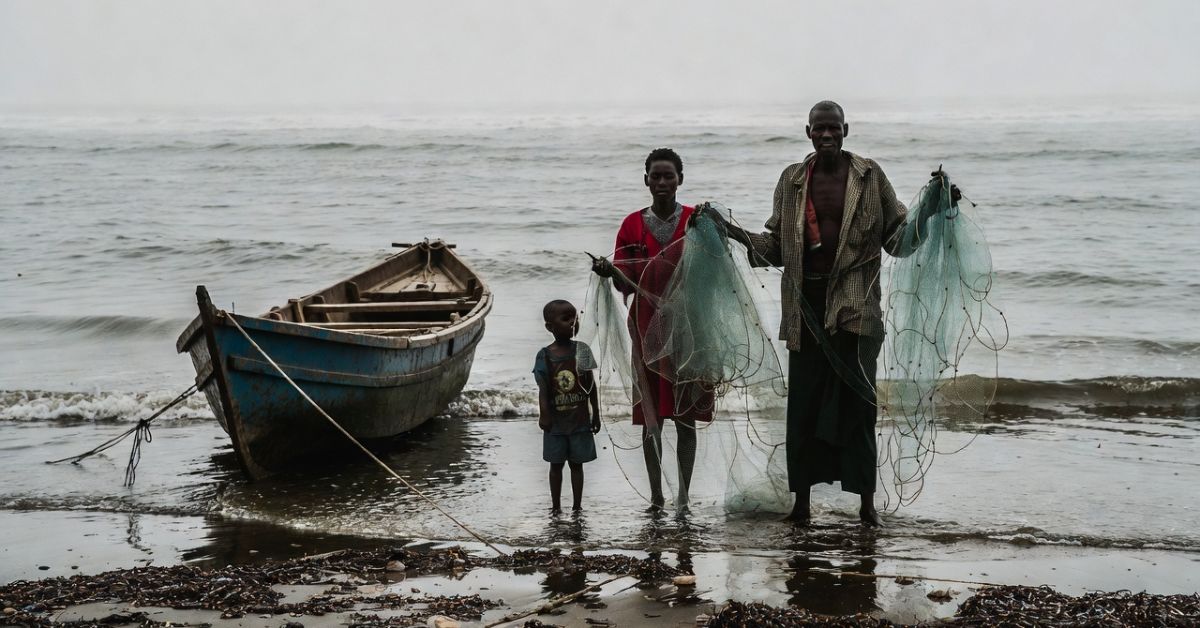
Before sunrise, a small boat is already on the water.
The engine coughs, then settles. Rope scrapes wood. Wet feet hit the deck. A weary figure checks the nets in the half-dark and feels the damage before fully seeing it. The mesh is almost empty again. The catch has been thin all year. The water still has that faint but noticeably “off” smell.
Back on shore, breakfast depends on what comes home. So does fuel for tomorrow. So does rent. So do school supplies. So does whether a child hears calm voices tonight, or hushed talk about bills after the lights go out.
This is what ocean abuse looks like when you stop talking about it like a distant environmental issue and look straight at the people living inside it. It is not abstract. It is not a neat campaign slogan. It is not just about coral, wildlife, or scenic beaches. It lands first on kitchen tables, in harbour towns, in fishing villages, in Indigenous coastal communities, and in families already working hard to stay afloat.
When the sea is stripped, poisoned, fenced off, dredged, trawled, or handed over to powerful interests, the first people hit are usually the people heard least. Small-scale fishers. Fisherwomen. Boat crews. Fish processors. Market traders. Elders. Children. Harbour workers. Families who depend on one stretch of coastline not as a pretty backdrop, but as the centre of life itself.
Surfers, swimmers, divers, sailors, and everyone else who claims to love the sea need to sit with that truth. We are not just looking at a damaged playground. We are looking at damaged livelihoods, damaged health, damaged culture, and futures being crushed in slow motion.
This is the real price of ocean abuse. And too many of the people paying it have been pushed out of the story.
The people hit first are the people heard least
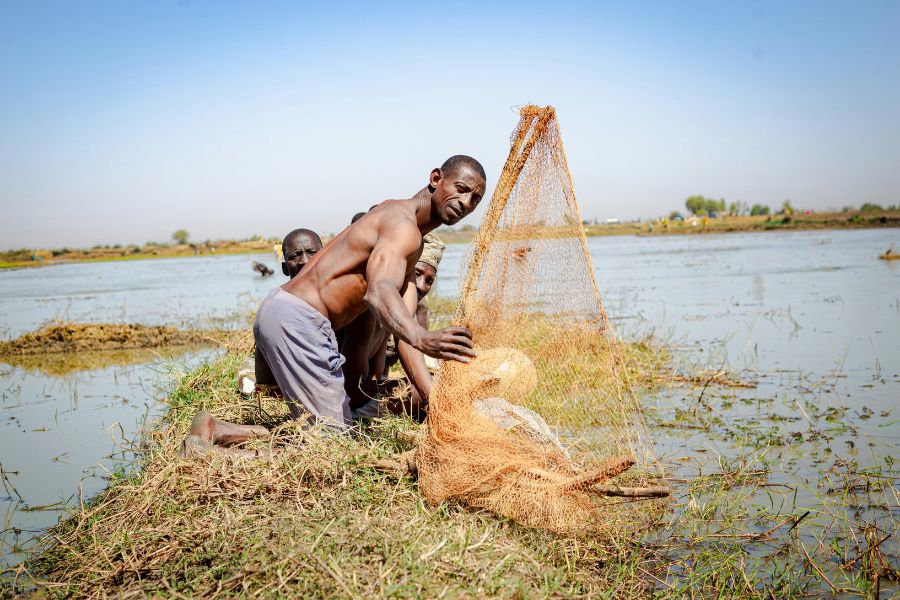
Small-scale fisheries are often treated as quaint, old-fashioned, or marginal. That is a lie that makes it easier to ignore them.
In reality, small-scale fisheries help feed communities, keep local economies alive, and hold together entire ways of life. Research on small-scale fishing and local food systems has shown again and again that these fisheries are central to food security, especially in coastal regions where fish is not a luxury but a basic source of protein and income. The recent Frontiers study on tropical fishing communities in India and Papua New Guinea puts it plainly: small-scale fisherfolk are key to livelihoods, fisheries value chains, and food systems, especially in emerging economies.
And yet, despite how vital they are, these communities are still treated as expendable.
That same study, based on participatory work with 230 fisherfolk in India and 209 in Papua New Guinea, found deep and shared vulnerability across very different coasts. The threats were not only ecological. They were social, economic, and cultural. Fishing populations were declining. Communities were ageing. Illegal and exploitative fishing by distant fleets was being reported. In many cases, the burden of keeping a household going fell heavily on one person. The authors described fisherfolk as facing a “socioeconomic identity crisis”.
That phrase matters. Because this is not only about fewer fish in the water. It is about the tearing apart of identity, dignity, and belonging.
Women carry a huge share of this burden, though their work is often hidden in plain sight. In many fishing communities, women mend gear, process fish, sell catch, manage household budgets, and keep families functioning when catches fall and money tightens. They are central to the life of the fishery, yet are still side-lined in policy and public storytelling. Even now, much of the formal research and governance around fisheries still fails to reflect that reality.
The same neglect shows up in how marine pollution is studied. A 2024 review in Frontiers in Ocean Sustainability found only 14 articles specifically addressing the impact of marine litter on small-scale fisheries. Fourteen! In a world drowning in plastic and coastal waste, whole communities whose nets, gear, catches, and health are damaged by rampant ocean abuse still barely register in the research. As the paper notes, local fishers are often portrayed as sources of marine litter, but much less often as victims of it.
That tells you a lot about the problem.
We have built a system that notices ocean damage when it spoils a view, hurts tourism, or threatens corporate supply chains. But when it crushes small coastal families, the response is too often silence.
Empty nets mean empty plates at home
When catches fall, families do not simply earn less. Their whole margin for error disappears.
A weak catch means less food to take home or sell. Less money means broken gear stays broken. Engines go unrepaired. Fuel becomes a gamble. A child may need to help more at home. School costs become harder to cover. Stress creeps into every decision.
That is how environmental damage becomes domestic strain.
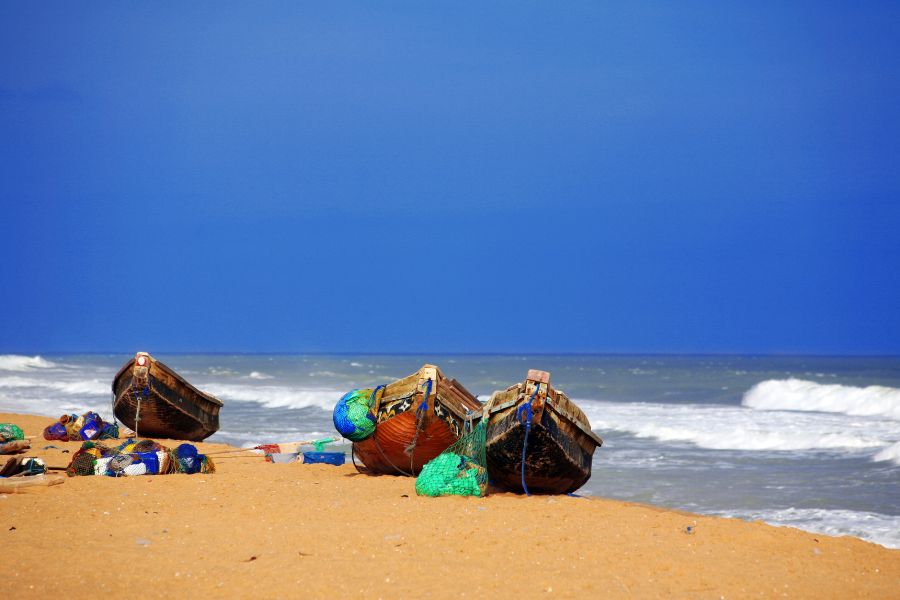
Global figures show how serious the wider pressure has become. Recent reporting and summary data point to 35.5% of global marine fish stocks being overfished. The long trend is worse still. Overfishing has climbed from around 10% in 1974 to more than a third of assessed stocks today. Behind those percentages are communities forced to work longer, travel further, and spend more to catch less.
And then comes the extra cruelty. As local fish stocks shrink, prices can rise. That means the very people who once fed their own communities can end up struggling to afford fish themselves.
The coast may still smell of salt and fresh catch. Restaurants may still serve seafood to visitors. Photos may still look beautiful on sunny days. But inside many fishing households, the reality is thinning meals, rising debt, and quiet fear.
This is why the language used by the FAO’s Voluntary Guidelines for Securing Sustainable Small-Scale Fisheries matters so much. The guidelines say small-scale fisheries are about “people, not just about fish”. That should not need saying. But clearly, it still does.
Because if policy truly centred people, coastal families would not be treated as acceptable collateral damage.
What gets lost is not just income, but identity
Fishing is never just the act of catching fish.
It is memory. It is timing. It is place. It is shared skill built over decades. It is stories told on harbour walls. It is practical knowledge that never came from a textbook. It is weather read from the colour of the sky. It is seabed known by feel. It is recipes, repairs, rituals, humour, pride, grief, and local names for tides and marks on the coast that outsiders will never learn.
When a fishing community is pushed out, those things do not survive untouched.
A harbour can keep the look of a working coast while losing the life inside it. Boats can become decoration. Seafood can become branding. The postcard remains, but the living culture underneath it starts to die.
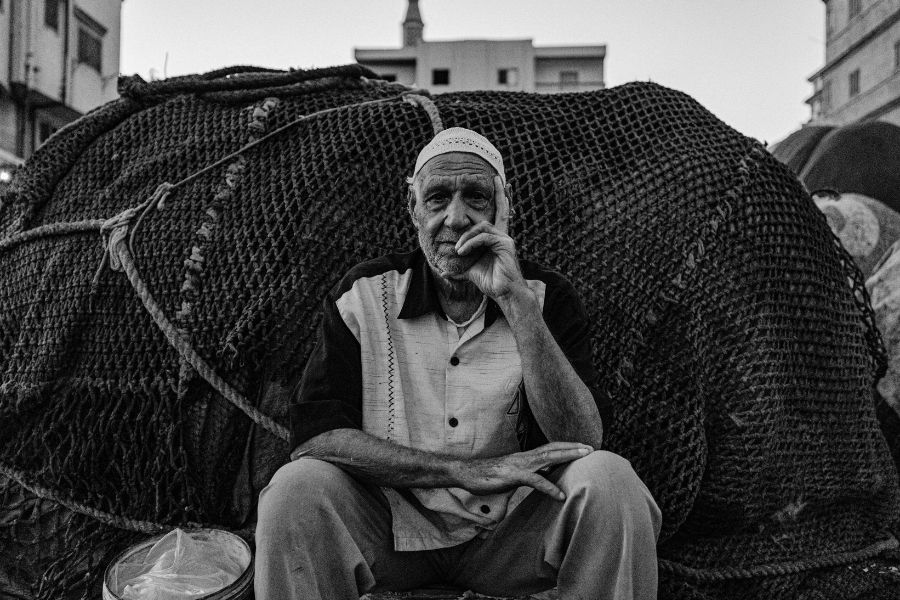
That is one of the ugliest tricks of ocean abuse. It can hollow a place out while leaving enough surface charm for everyone else to pretend nothing serious has happened.
The 2025 Frontiers study found that fishing in many communities still embodies unique socio-cultural identities, protected through long-held methods and deep local knowledge. So when these people are forced out by shrinking access, falling catches, distant fleets, or damaged ecosystems, the loss is not only economic. It is existential.
When coastal families lose the ability to fish, they do not just lose income. They lose rhythm. They lose status. They lose connection to land and sea. They lose part of who they are.
What ocean abuse looks like when you strip away the PR
Strip away the glossy sustainability reports, the carefully chosen marketing language, and the smug green branding, and the picture is brutally clear.
- Big industrial fleets take too much.
- Bottom trawling and dredging rip through nursery grounds and fragile habitats.
- Pollution poisons nearshore waters.
- Ports, refineries, tanker routes, and coastal development squeeze communities off the edges they have relied on for generations.
- Weak rules, poor enforcement, and profit-first politics protect powerful interests while treating local people as an inconvenience.
And the damage stacks. That is what makes it so vicious.
A small fishing community might face overfishing, habitat destruction, marine litter, dirty runoff, restricted access, rising fuel costs, and weak representation all at once. No single pressure has to be enough on its own. Together, they become a crushing weight.
Seagrass meadows, kelp forests, estuaries, mangroves, and seabeds are not spare space waiting to be used up. They are nurseries, feeding grounds, buffers against storms, and the living base of future catches. Destroy them and you do not just hurt biodiversity. You cut into food security, coastal protection, and local survival.
The 2024 review on marine litter and artisanal fishers makes another important point. Marine litter harms ecosystems, tourism, human wellbeing, and local economies. It tangles gear, damages fishing activity, and increases financial and mental strain. Yet the social side of that damage is still under-studied and often ignored.
Again, the same pattern appears. Coastal communities live with the harm, but others control the narrative.
Industrial fleets take the fish, then leave the wreckage behind
One of the most common patterns in this crisis is painfully simple. Small boats depend on nearby waters. Industrial fleets can move in, take huge volumes, and move on.
That power imbalance warps everything.
The 2025 Frontiers paper records reports of illegal and exploitative fishing by distant fleets. Communities in both India and Papua New Guinea described increasing vulnerability linked to outside pressure and weak systems of governance. The study also notes that rising pressure can push people towards unsustainable practices, not because they want to destroy the sea, but because desperation narrows choices.
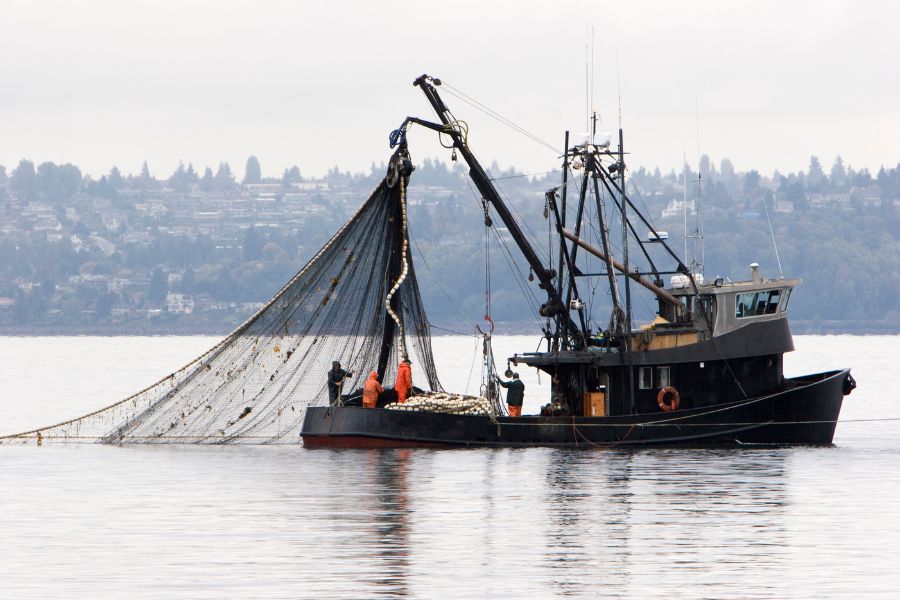
That matters. Too much ocean policy still talks as if all fishers are equally responsible, equally powerful, and equally heard. They are not.
The FAO small-scale fisheries guidelines were created precisely because this sector has long needed a rights-based approach. The guidelines stress human rights, dialogue, and action from local to global level. They focus on securing sustainable small-scale fisheries in the context of food security and poverty eradication. In plain English, that means local fishers should not be sacrificed so larger players can keep extracting value.
And yet that sacrifice keeps happening.
Case study: Karnataka, India, and the violence of shrinking space
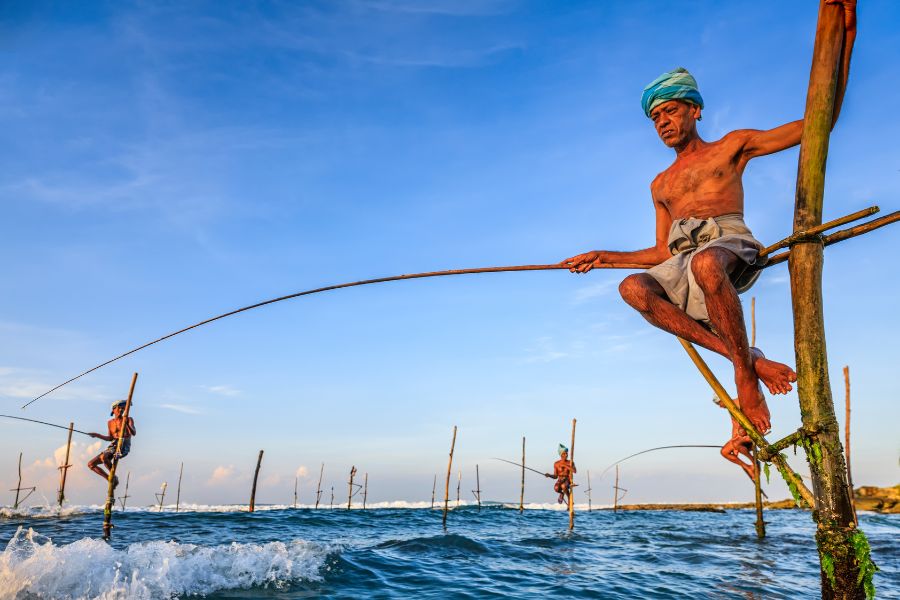
One of the clearest examples comes from the Karnataka coast in India.
The 2024 paper in Maritime Studies, titled “Accumulation by dispossession: evidence of shrinking space for small-scale fishers of Karnataka coast”, gets to the heart of a reality seen in many parts of the world. The crisis is not only about stock decline. It is also about access. About who gets to use the coast. About who gets pushed aside.
Small-scale fishers on the Karnataka coast face a shrinking world created by forces far bigger than any one boat. Industrial development, port expansion, blue economy projects, and wider forms of coastal grabbing reduce the physical and political space available to fishing communities. This is dispossession dressed up as progress.
That word, dispossession, is not academic fluff here. It means people losing practical control over the shorelines and waters that sustain them. It means decisions made elsewhere. It means local rights weakened in favour of larger economic interests. It means fishers being treated as obstacles in places where they should be central voices.
The result is deeply familiar. Less space. Less security. Less say. More pressure.
And this is exactly why ocean abuse cannot be reduced to “the environment”. A family that loses safe access to fishing grounds does not care whether the harm came from a trawler, a port development plan, dredging, or a refinery pipeline. The result at home is the same. Less food. Less income. More fear.
Pollution and extraction poison the waters people rely on
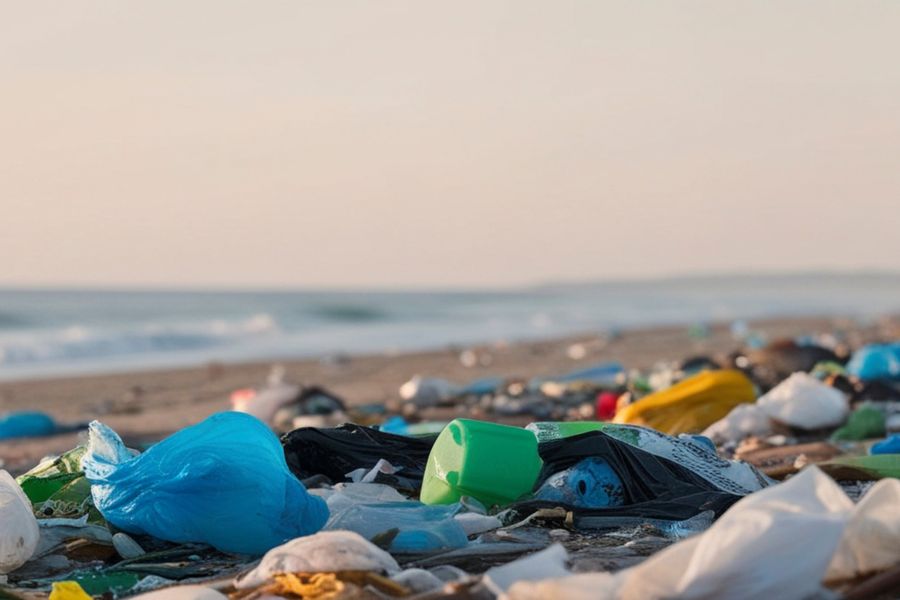
Pollution is often discussed as if it is general, floating, and anonymous. For coastal families, it is not.
- It is specific.
- It is the patch of water that no longer feels safe.
- It is the catch no one trusts.
- It is the beach where litter snags nets and wrecks gear.
- It is the estuary made dirty by runoff.
- It is the oil infrastructure that blocks access and increases risk.
- It is the port development that tears apart local habitat.
The 2024 Frontiers review on marine litter makes clear that the impacts spread well beyond ecology. Marine litter reduces ecosystem services, harms human health and wellbeing, damages tourism, disrupts fishing activity, and causes economic loss. The study also highlights a major blind spot: artisanal fishers are heavily affected by this pollution, yet are rarely centred in the research or response.
That absence has consequences.
When fishers are not seen as victims, they do not get support. When they do not get support, communities absorb the damage alone. When communities absorb the damage alone, stress builds into something much harder to measure: hopelessness.
That psychological strain matters. Fear, frustration, helplessness, and exhaustion are all part of the real cost. A family does not need a disaster headline for pollution to break them. Slow contamination and daily uncertainty can do plenty of damage on their own.
Why this feels personal in Cornwall, and why it points to a global crisis
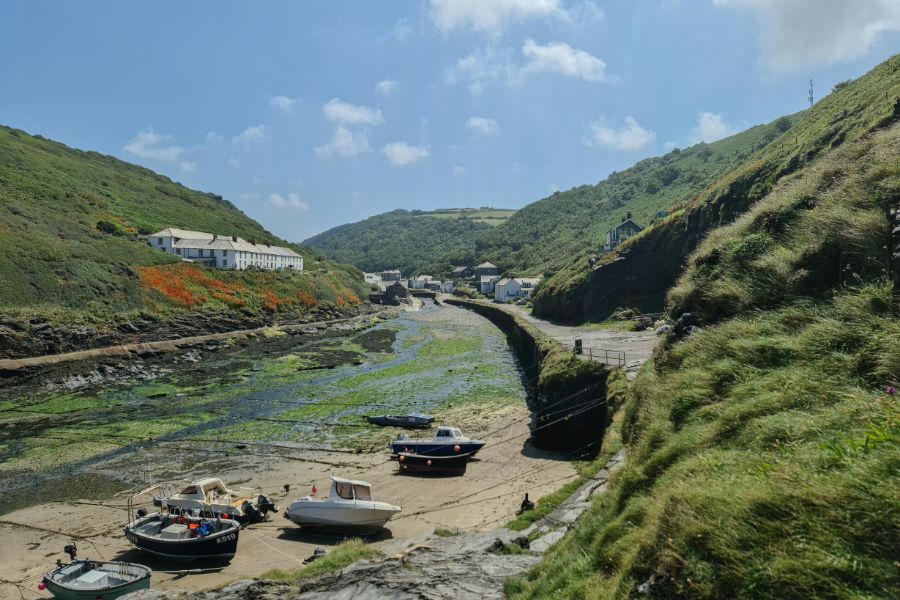
For me, this is not theory.
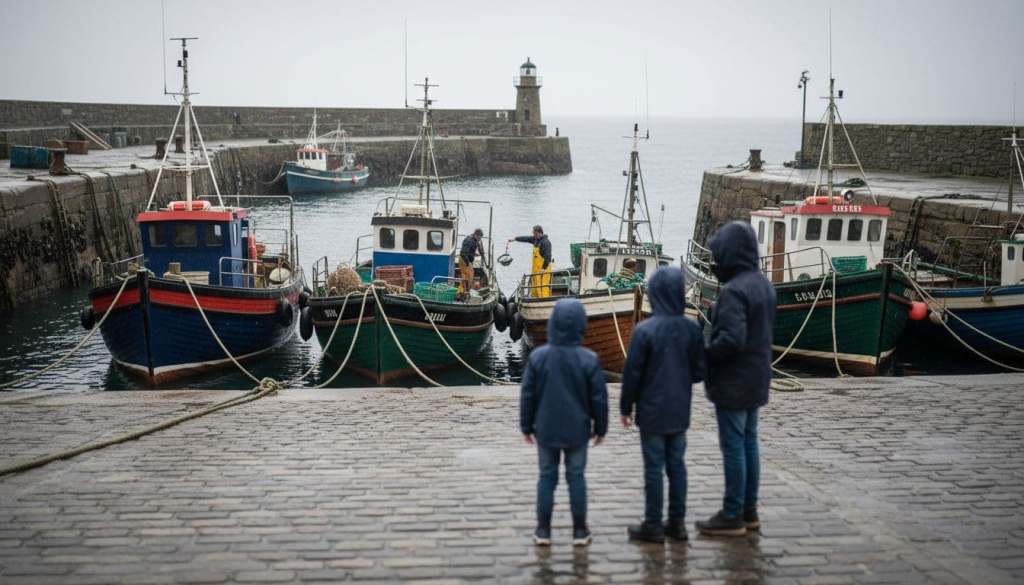
I grew up in a small harbour town in Cornwall, surrounded by the sights, sounds, and smells of a working coast. Every day of the season I would watch the small commercial boats head out, beautifully designed vessels crewed by men and women who knew every rock and tide. I would watch them return and land fresh fish, the kind of catch that fed local families and filled the kitchens of the restaurants that help keep Cornwall’s tourism economy breathing.
That world shaped me.
It taught me that the sea is not just scenery. It is work. It is deeply embedded culture. It is discipline. It is family. It is daily risk. It is local identity.
But over time I watched the strain increase.
Season after season, the skippers I knew would stand on the quay shaking their heads, talking about how much tougher it was getting. Fewer fish. Tighter quotas. Rising costs. More pressure from industrial fishing further offshore. More damage to the habitats local waters depend on. The small-boat fleet that once helped sustain the community was being squeezed from all sides.
You could feel it before you could prove it. The mood changed first. Then the stories repeated. Then the pattern became impossible to ignore.
And the impact reached well beyond the boats. Fresh local seafood supports jobs far beyond the harbour. It supports markets, restaurants, tourism, suppliers, and the identity Cornwall sells to the world. When the small-boat fleet struggles, the wider community feels it too.
That personal reality, seeing proud, hard-working people slowly squeezed out of their livelihoods, became the spark behind Our Souls of the Sea. Because if it is happening in one of the UK’s most iconic fishing counties, it is happening in countless coastal communities around the world.
Cornwall was the local face of a global pattern.
From one harbour wall to a worldwide pattern
What I saw growing up was not an isolated story. It was one version of a much bigger global issue.
Across the world, small-scale fishing communities keep being told, in one form or another, that there is less room for them now. Less fish. Less access. Less influence. More cost. More competition. More decisions made far away by people who will never depend on that stretch of water to feed their child.
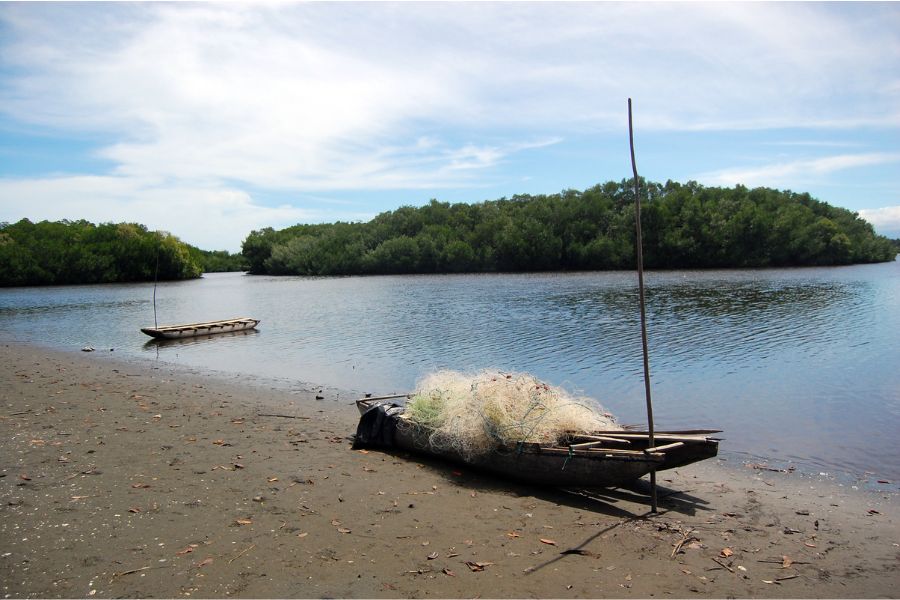
The India and Papua New Guinea study shows that even across very different geographies, fisherfolk report common vulnerabilities. The Karnataka paper shows how fishing space itself can be taken away through policy and development. The marine litter review shows that even where damage is obvious, the burden on artisanal fishers is barely studied. The FAO guidelines show that the international community already understands, at least on paper, that small-scale fisheries must be approached through rights, food security, and human dignity.
The evidence is there.
What is missing is urgency, honesty, and political courage.
What real support looks like when communities come before profit
Anger matters. Outrage matters. Calling out the lie matters. But if that is all we do, the people on the front line still get left carrying the weight.
- They need backing. Real backing.
- They need resources, not slogans.
- They need education that respects local knowledge instead of talking down to them.
- They need legal and political support.
- They need stronger inshore protections.
- They need fair access.
- They need proper enforcement against illegal and destructive fishing.
- They need cleaner coastal waters.
- They need their experience taken seriously when rules are made.
- They need a platform loud enough to cut through the comfortable noise that keeps burying their reality.
That is what Our Souls of the Sea is trying to build.
And this is the heart of it:
“Our ultimate goal is to build a truly philanthropic platform that supports the people who actually rely on the ocean, not just for their livelihoods, but for the lives of their families and the wellbeing of their communities. These are the people suffering first-hand from rampant ocean abuse: grotesque industrial fleets vacuuming the seas empty, destructive practices ripping up seagrass meadows and kelp beds, and pollution that devastates entire local habitats. These aren’t abstract problems, this is the brutal daily reality behind the global ocean crisis. We aim to give them real resources, meaningful education, and genuine support, while handing these often-unheard voices a loud-as-hell platform to shout from. We know this is a long, tough road with serious obstacles in the way, but we are committed with everything we’ve got. We believe the very first step on this journey is simple: keep calling out the bullshit and raising awareness of what becomes possible when profit, bonuses, and shareholder value stop being the only focus.”
That is not polished campaign language. Nor should it be. The truth here does not need polishing. It needs saying clearly.
This is also why our wider work on sustainability in surfing matters. If the surf world wants to talk seriously about sustainability, it cannot stop at materials, branding, or clever product lines. It has to follow the harm all the way back to the communities who live with it every day.
If your idea of loving the ocean starts and ends with your session, your gear, and your feed, it is not love. It is consumption with nicer language.
The fixes already exist, but they need courage and pressure
This crisis is not unsolvable. That is part of what makes the failure so infuriating.
We already know many of the basics.
- Protect inshore waters for small boats and local communities.
- Enforce existing rules against illegal and destructive fishing.
- Recognise community rights in fisheries governance.
- Include fisherwomen, Indigenous communities, and traditional knowledge in decision-making.
- Clean up coastal pollution at source, not just after the damage is done.
- Support repair, reuse, and circular habits in surf, boating, and coastal life so less waste ends up back in the sea.
We need to stop pretending that a token recycling claim or a nicer hangtag counts as serious change. It does not. Real change means less extraction, less waste, less greenwashing, and more accountability from the industries making money off ocean culture while ignoring ocean harm.
Protected areas and exclusion zones can help too, but only when they are fair, properly enforced, and designed with local communities, not dumped on them from above.
Conservation that locks out small-scale fishers while letting bigger interests carry on is not justice. It is just another form of dispossession with better branding. Just look at the recent “Pollack Ban” in the UK, set in place as a result of industrial fishing hammering the stocks. The big boats just shifted their focus to hoovering up other species, while local artisanal line caught pollack fishers were forced to dry dock their boats, and their livelihoods.
The research is already pointing in the right direction. The 2025 Frontiers study on small-scale fishing communities in the tropics identified collaborative governance, community-based fisheries rights, stronger licensing, fisherwomen’s inclusion, and recognition of Indigenous and conventional fishing knowledge as critical parts of any serious path forward. In other words, the solutions are not mysterious. What is missing is the will to put people before profit.
Conclusion
Ocean abuse is not only about dying reefs, vanished species, or ugly headlines. It is about real families being pushed to the edge. It is about meals that do not make it to the table. It is about children growing up inside uncertainty. It is about elders watching culture drain out of a coastline they once knew by heart. It is about communities being told, over and over, that their suffering is acceptable as long as someone else keeps making money. That should disgust us.
If you are someone who loves the sea, it should do more than disgust you. It should move you. Because the truth is simple. The ocean crisis is not happening somewhere else, to someone else. It is tied to the harbours we walk through, the seafood sold in our towns, the beaches we surf, the coastlines we celebrate, and the communities that have protected and understood these waters long before most brands, campaigns, and politicians decided the ocean was worth talking about.
The forgotten families paying the real price of ocean abuse should not be forgotten any longer. So back them. Listen to them. Amplify them. Challenge the greenwashed rubbish. Question who profits. Question who gets ignored. Refuse the lazy story that this is only about scenery or wildlife, because it is not. It is about justice. It is about dignity. It is about whose lives are treated as disposable.
Our Souls of the Sea exists because these voices matter, and because they deserve far more than pity. They deserve resources, respect, protection, and power. This road will be long. It will be hard. There are serious obstacles in the way. But the first step is still the same. Tell the truth loudly. Call out the bullshit clearly. Stand with the people on the front line of this damage. Then keep going until they are no longer forced to carry the cost of ocean abuse alone.
Sources and further reading
- FAO, Voluntary Guidelines for Securing Sustainable Small-Scale Fisheries in the Context of Food Security and Poverty Eradication
- Frontiers in Ocean Sustainability, Netting the problem: a comprehensive analysis of marine litter on artisanal fishers (2024)
- Frontiers in Ocean Sustainability, Exploring cross-country externalities, viable resilience, and sustainability options for small-scale fishing communities in the tropics (2025)
- Maritime Studies, Accumulation by dispossession: evidence of shrinking space for small-scale fishers of Karnataka coast (2024)
- Earthjustice, submission on the human rights impacts of overfishing
 Our Souls of the Sea