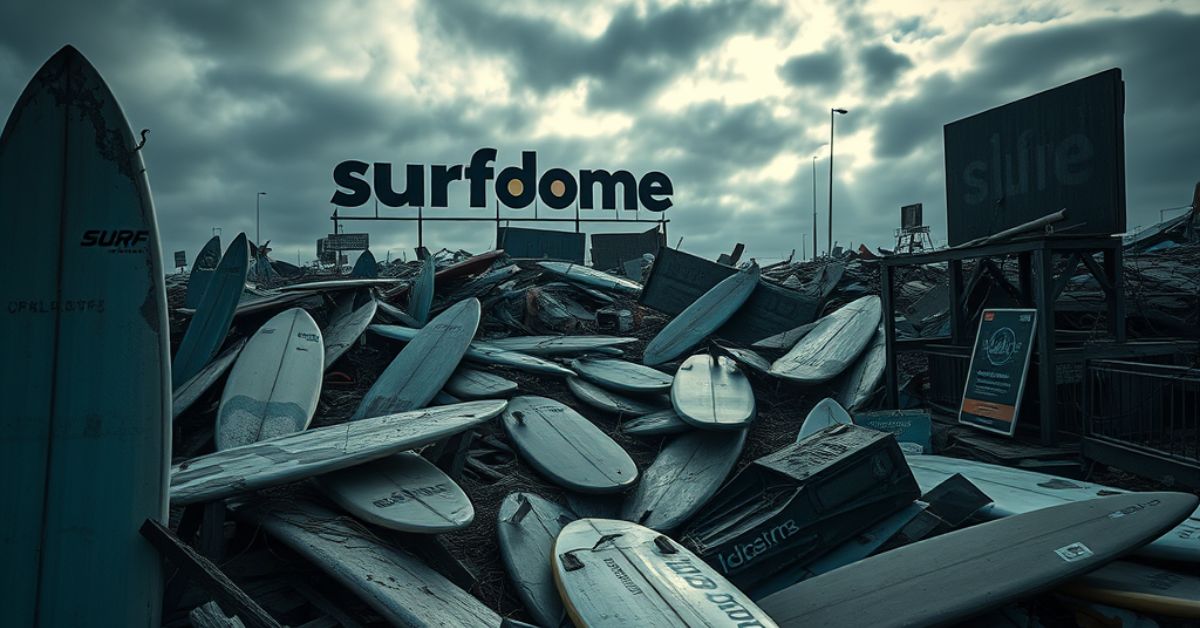
Surfdome, once lauded as a champion of sustainability and a cornerstone of the surf retail industry (albeit self proclaimed), has crumbled under the weight of its own contradictions. Once a trusted hub for surfers and outdoor enthusiasts, the demise now stands as a cautionary tale of corporate greed, shallow marketing, and an utter failure to uphold the values it claimed to represent. Behind the facade of eco-conscious branding lies a story of bankruptcy, opportunistic acquisitions, and a betrayal of the very community it purported to serve. The glossy veneer of curated collections and eco-conscious marketing shrouded a stark reality: Surfdome had become emblematic of a surf industry that prioritises profit over planet.
The Illusion of Sustainability
Surfdome’s sustainability messaging often fell into the realm of greenwashing. By promoting pseudo-eco initiatives and showcasing brands with questionable practices (and great marketing teams), the company obscured the environmental and ethical impact of its operations. For example, many of the legacy surf brands on Surfdome’s platform—like Quiksilver, Billabong, and Rip Curl—have been criticized for their lack of genuine commitment to sustainability. These brands’ use of petrochemical-based materials, unsustainable supply chains, limited recyclability options, and questionable labour ethics stands in stark contrast to their polished advertising campaigns.
One glaring example of this was Rip Curl’s 2016 scandal, where it was revealed that items were being produced in North Korea under exploitative labor conditions. Despite this, Surfdome and other major retailers continued to promote Rip Curl’s products, and in 2023, celebrated their B-Corp certification without a single acknowledgment of past transgressions. This silence speaks volumes about where priorities truly lie.
From Sustainability Pioneer to BrandAlley Acquisition

In a dramatic turn of events, Surfdome’s parent company, Internet Fusion Group (IFG), succumbed to financial pressures and declared bankruptcy in 2023. This marked the end of Surfdome’s aspirations to lead the surf industry toward a more sustainable future. Instead, the company was acquired by BrandAlley, a retailer known more for its focus on discounted designer goods than environmental stewardship.
The transition from being a self-proclaimed “pioneer of sustainability” to a cog in the BrandAlley machine is a bitter pill for the surf community. BrandAlley’s acquisition salvaged parts of the logistics operation and customer service team, saving 125 jobs, but left over half of Surfdome’s workforce unemployed. Moreover, BrandAlley opted not to purchase Surfdome’s existing stock, further underscoring the transactional nature of the takeover.
This acquisition raises critical questions about the integrity of Surfdome’s earlier sustainability claims. Was the commitment to eco-friendly practices ever genuine, or was it merely a marketing ploy to secure consumer trust while the company faltered behind the scenes?
The Bottom Line Over Ethics

Surfdome’s reluctance to hold brands accountable stems from a fear of disrupting lucrative partnerships. Surf brands—including the likes of Roxy, DC Shoes, and RVCA—have historically shown little tolerance for criticism, preferring to maintain the status quo. Calling out a major player like Quiksilver for its environmental shortcomings could mean jeopardizing access to an entire portfolio of associated brands.
This prioritization of the bottom line over ethics creates a vicious cycle where retailers and brands alike avoid accountability. Instead of using their platforms to elevate genuinely sustainable and forward-thinking companies like Finisterre and Outerknown, e-commerce giants like Surfdome perpetuate a system that rewards complacency and punishes progress.
Behind the Collapse: Financial Turmoil and Industry Shocks
The financial instability of Surfdome’s parent company, IFG, further underscores its systemic failures. In 2021, IFG’s ambitious plans to integrate acquisitions like Shadestation and Northcore unraveled when it failed to meet payment obligations to previous owners. These financial missteps forced IFG’s subsidiary into liquidation, dragging Surfdome into a downward spiral.
By early 2023, the company was carrying shareholder debts exceeding £20 million. Advisors, backed by HSBC, managed to secure a prepack administration deal with BrandAlley, salvaging part of the logistics operation and customer service team while leaving over 125 employees without jobs. This collapse was not unexpected within the industry, as Surfdome’s payment delays and public struggles to raise funds had been an open secret. Nevertheless, it marks a significant shift in the UK boardsports retailing landscape.
The Problem with Surf E-Commerce

Large-scale e-commerce in the surf industry will never be truly sustainable as long as its focus remains on volume and growth at any cost. The toxic footprint of surf-related products—from petrochemical surfboards and neoprene wetsuits to mass-produced apparel—is undeniable. Yet, instead of tackling these issues head-on, companies double down on superficial fixes.
Wrapping environmentally damaging products in recycled paper or powering warehouses with renewable energy does not absolve these businesses of the harm caused by the items they sell. Worse still, the extensive carbon footprint of returns, often necessitated by poor product fit or over-purchasing, exacerbates the problem.
A Call for Accountability
It is time for the people heralding Surfdome as a pioneer in the surfing sustainability space, and their peers, to reassess their role in the surf industry. If these companies want to claim the mantle of sustainability, they must take meaningful action:
- Name and Shame Poor Performers: Retailers must hold brands accountable for unethical and unsustainable practices. This includes removing non-compliant brands from their platforms.
- Prioritise Transparency: Stop celebrating superficial milestones and start providing detailed reports on the environmental and ethical impact of the products sold.
- Promote Genuine Innovators: Give platform space to independent, eco-innovative brands striving to make a real difference.
- Rethink the Business Model: Move away from over-reliance on legacy brands and embrace a model that values quality and ethics over quantity.
The Way Forward
Surfers have always been natural environmentalists, attuned to the rhythms of the ocean and the needs of the planet. Surfdome had a responsibility to reflect these values, not exploit them. And they fumbled the bag! As it stands, Surfdome represents a lost opportunity to lead the industry toward a more sustainable future, and several individuals and organisations attached to the failed group should hang their heads in shame.
The surf world doesn’t need more greenwashing; it needs radical honesty and decisive action. Until the likes of Surfdome embrace these principles, their claims of sustainability will remain little more than marketing rhetoric.
 Our Souls of the Sea